Climbing Mount Kenya, A Homegrown Adventure Above the Clouds
Everybody who has ever stood at the base of Mount Kenya and squinted up at that jagged rock horn poking through the clouds has had the same dumb thought cross their mind: "that doesn't look too bad." It absolutely is too bad. Or rather, it's exactly as bad as it needs to be, which is to say demanding, humbling, and completely worth the bruised ego you'll carry home. Climbing Mount Kenya isn't a stroll through moorland with a nice view at the end. It's a mental grind wearing you down in a windy, sunburned alpine zone where every single step past 4,000 metres feels earned, negotiated, fought for.
The short answer to "what does it take to climb Mount Kenya" is this: pick a route that matches your fitness and ambition, acclimatize properly over four to six days, respect the altitude more than you respect your own schedule, and decide upfront whether you're chasing Point Lenana or the true, technical summit. Everything else, the gear lists, the permit fees, the seasonal timing, is detail that supports that one decision. Get the decision right and the rest falls into place.
Why Climb Mount Kenya?
Africa's Second Highest Peak
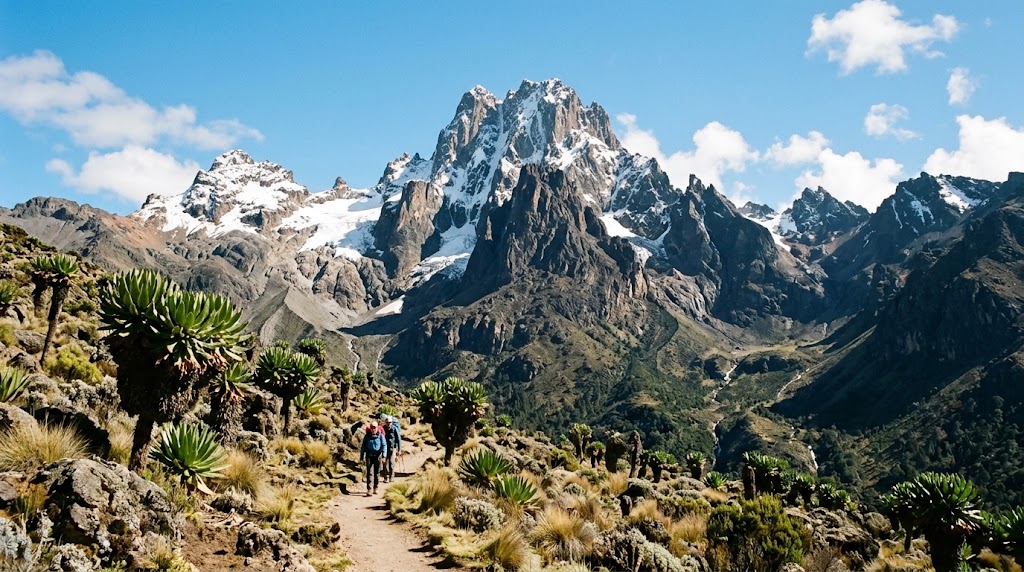
Mount Kenya sits at 5,199 metres, making it Africa's second highest mountain after Kilimanjaro, and honestly, that ranking undersells it. According to the official UNESCO World Heritage Site profile, the peak carries twelve rapidly shrinking remnant glaciers, a fact that changes the whole character of the climb because you're not just walking up a hill, you're walking through a live case study in retreating ice. The Kenya Wildlife Service park guide confirms the exact elevations that matter most to anyone planning a trip: Batian at 5,199 metres, Nelion at 5,188 metres, and Point Lenana at 4,984 metres. Three summits, one mountain, wildly different climbs.
A Volcanic Alpine Ecosystem
This is an extinct volcano, not a fold mountain like the Rift Valley escarpments nearby, and that volcanic origin explains the jagged, spire-like rock formations you don't get on most East African peaks. The UNEP-WCMC datasheet on the mountain's forest reserve notes the continuous indigenous closed-canopy forest blocks ringing the base, home to endemic Afro-alpine flora found almost nowhere else on the continent. You climb through five or six distinct ecological zones in a single trip, montane forest, bamboo, heath, moorland, alpine desert, then rock and ice. Few mountains anywhere compress that much ecological range into a three or four day ascent.
Fewer Crowds Than Kilimanjaro
I'll say the unpopular thing. Kilimanjaro has become something of a conveyor belt, and Mount Kenya hasn't, not yet anyway. You get quieter trails, guides who actually know your name by day two, and a summit experience that feels earned rather than queued for. That's not a knock on Kilimanjaro. It's just a different animal, and if solitude on a mountainside matters to you, Mount Kenya delivers it in a way its taller neighbor increasingly can't.
What Are the Main Routes Up Mount Kenya?
There are technically more than a dozen paths up this mountain, including lesser known options through the western slopes and the Timau routes, but three routes handle the overwhelming majority of traffic, and each one has a personality.
Sirimon Route
Sirimon approaches from the north west and is widely regarded as the driest, most gradual route up, which makes it the friendliest option for acclimatization. You'll pass through Old Moses Camp, sitting around 3,300 metres according to route data compiled in the Go To Mount Kenya trekking guide, before pushing toward Shipton's Camp at roughly 4,200 metres, tucked right under the central massif with the kind of view that makes you forget your knees hurt. Most operators pair Sirimon going up with Chogoria coming down, a combination that a detailed route breakdown from Global Summit Guide flags as the ideal five to six day profile for safe altitude adjustment.
Naro Moru Route
Naro Moru is the shortest, steepest, and honestly the least forgiving of the three main lines. It's popular because it's fast, but fast on a mountain usually means your body doesn't get the time it needs to adjust, and this route has a reputation for higher rates of altitude sickness precisely because people try to summit in three days flat. The infamous "vertical bog" section, a stretch of tussock grass and mud in the moorland zone, has broken more hiking boots and worse moods than any other single stretch on the mountain.
Chogoria Route
Chogoria, approaching from the east, is the one most seasoned trekkers will tell you is the most beautiful, and I don't disagree. The Gorges Valley views alone justify the extra day it usually takes compared to Naro Moru. A comparison of trail infrastructure from Mount Kenya Trekking's route guide distinguishes it clearly from Sirimon and Naro Moru because it leans more toward wilderness camping than permanent hut accommodation, which suits people who don't mind carrying a bit more but want the scenery payoff.
Route | Typical Duration | Difficulty | Accommodation Style |
|---|---|---|---|
Sirimon | 4-5 days | Moderate, gradual | Huts and camps |
Naro Moru | 3-4 days | Steep, faster ascent | Huts, some camping |
Chogoria | 5-6 days | Moderate, scenic | Mostly camping |
What Is the Difference Between Point Lenana, Nelion and Batian?
Point Lenana, the Trekker's Summit
Point Lenana, at 4,984 metres, is what almost everyone means when they say they "summited Mount Kenya." It requires no ropes, no climbing hardware, just fitness, decent acclimatization, and stubbornness. It's a trekking peak in the truest sense, achievable by fit hikers with zero mountaineering background, which is exactly why it draws the bulk of visitors.
Nelion, the Technical Peak
Nelion sits at 5,188 metres and is a different sport entirely. You need rock climbing competence, ropes, a harness, and ideally a certified mountain guide who has done the route dozens of times. This is where trekking ends and mountaineering begins, and conflating the two is how people get into trouble.
Batian, the True Summit
Batian, the actual highest point at 5,199 metres, is separated from Nelion by the aptly named Gate of the Mists, a notch that demands technical climbing to cross. It sees a fraction of the traffic Lenana does, and for good reason. This is a mountaineer's objective, not a trekker's bucket list item, and pretending otherwise on the mountain itself is a good way to end up in a rescue report.
When Is the Best Time to Climb Mount Kenya?
Dry Season Windows
The two dry windows, January through March and July through October, offer the clearest skies and firmest footing. A seasonal breakdown from Wild Springs Adventures backs this up, contrasting those dry stretches against the muddy, slick paths of the long and short rains. If you have any choice in your travel dates, build your trip around these windows rather than around convenience.
Wet Season Risks
Outside those windows, expect mud, reduced visibility, and a meaningfully higher chance of your summit attempt getting cancelled by weather at the last camp. Academic climate data referenced on Wikipedia's overview of the mountain's climate notes that wet seasons account for roughly five sixths of annual rainfall, concentrated in fairly predictable blocks. That's not a coincidence you want to gamble against.
How Much Does It Cost to Climb Mount Kenya?
According to Mount Kenya Adventures, the cost of climbing Mt. Kenya depends on various things among them the number of people in a group and how many days they are intending to climb. This usually involves both the park and facilitation fees whose average cost is $200 per day for a single person.
Guide and Porter Costs
Regulations covering the park, including limits published through the Kikosi visitor checklist, cap porter loads at 25 kilogrammes and mandate that visitors travel with a certified guide, full stop, no exceptions. Budget for guide and porter wages as a fixed cost, not an optional extra, because frankly it isn't optional.
Budgeting for Huts vs Camping
Hut based routes like Sirimon tend to cost slightly more per night than pure camping routes like most of Chogoria, but you trade cash for shelter from the wind at 4,000 metres, which on a bad night feels like the better deal.
What Gear Do You Need for Mount Kenya?
Layered clothing system: base layer, insulating fleece, waterproof shell, because the temperature swings brutally between the forest zone and the summit push
Sturdy waterproof boots with ankle support for scree and loose volcanic rock
A headlamp with spare batteries, since summit pushes typically start well before dawn
A four season sleeping bag rated for sub-zero nights at altitude
Trekking poles, which save your knees more than any other single item on this list
Gear here isn't about gadgets. It's about relevance. Bulky, unfamiliar equipment just wastes energy you need for the mountain itself.
How Dangerous Is Climbing Mount Kenya?
It's dangerous in the specific ways altitude and weather make any high mountain dangerous, not in some exaggerated adventure-brochure way. An archival report from Al Jazeera on fatalities on the mountain references warden accounts of high-altitude pulmonary and cerebral risks, along with hypothermia on the technical sections near Nelion and Batian. Climate data from the park's own weather analysis notes a temperature drop of roughly 0.6 degrees Celsius per 100 metres of ascent and a 12 percent drop in atmospheric pressure per 1,000 metres, numbers that explain exactly why people underestimate this mountain until their body forces the lesson on them.
How Do You Acclimatize and Avoid Altitude Sickness?
Climb slowly, sleep low relative to your day's high point where the route allows it, drink more water than feels necessary, and treat any headache or nausea as a signal to stop, not push through. The lightheaded, winded feeling arrives well before your body admits defeat, and there's a real delay between effort and visible progress at altitude. That delay is the whole game. Rushing a four day itinerary into three is the single most common reason people turn back short of Point Lenana, and no amount of gym fitness back home changes that math.
What Wildlife and Terrain Will You Encounter?
Lower forest zones hold buffalo, elephant, and the occasional leopard, though you're far more likely to hear them than see them. Higher up, the terrain flattens into moorland dotted with giant lobelia and groundsel, genuinely strange looking plants that exist almost nowhere else on the planet outside East Africa's high volcanic peaks. Birds are a constant companion too, with sunbirds and augur buzzards working the thermals right up into the alpine zone.
FAQ
Do I need mountaineering experience to climb Mount Kenya? Not for Point Lenana. You do for Nelion or Batian.
How many days should I budget? Four to six days minimum, with Sirimon up and Chogoria down being a commonly recommended combination for acclimatization.
Is a guide mandatory? Yes, park regulations require it.
Can I drink from the mountain streams? Not without treatment, and the park's plastic bottle ban means you'll want a proper filtration or purification setup regardless.
Conclusion
Mount Kenya rewards patience more than raw fitness, and it punishes ego faster than almost any other trip you'll take on this continent. Pick your route based on honest self-assessment rather than what sounds fastest, respect the acclimatization schedule even when it feels slow, and decide early which summit you're actually climbing toward, because Lenana, Nelion, and Batian are three different mountains wearing the same name. Do that, and the version of you that comes back down will be a little more tired, a little more humble, and genuinely glad the mountain didn't make it easy.